








Skip to content

Lead generation for restaurants

Full on Tuesday, not just on Saturday

Saturday takes care of itself. The problem is the weekday evenings, the last two weeks of January and that one function room that stays empty. That is exactly where advertising can actually steer.

No access to your accounts needed

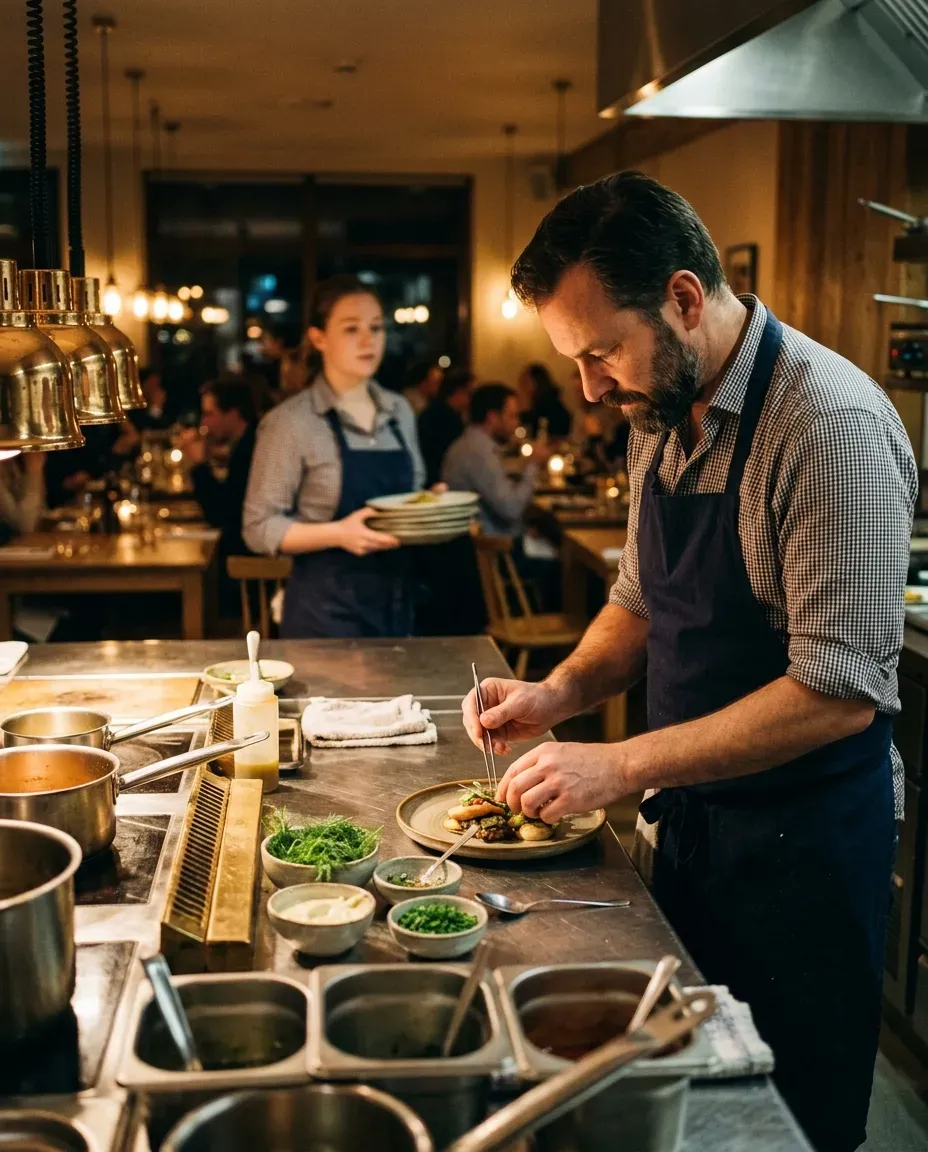
Restaurant owner plating a dish at the pass during service

Clients served

Agencies and organisations I have worked with over more than ten years — campaigns for national and international A-brands, from sole trader to listed company.

  • Havas Media Network
  • Publicis Groupe
  • Candid
  • The Fully Bookers
  • Hide and Seek
  • no.dots
  • matter
  • strevon
  • Havas Media Network
  • Publicis Groupe
  • Candid
  • The Fully Bookers
  • Hide and Seek
  • no.dots
  • matter
  • strevon

The problem

Sound familiar?

You advertise hardest when you're already full

Most restaurant campaigns run on the same budget all year round. So on Friday afternoon you pay for people who would have booked anyway, while nothing is running on the Tuesday you actually wanted to fill.

The reservation comes in, but you don't know what drove it

Bookings run through a reservation system on another domain. If that step isn't measured back, Google only sees clicks and not a single reservation — so it optimises towards nothing.

Delivery and private dining are mixed together

Someone who wants takeaway tonight and a company looking for a Christmas party for forty people are two completely different customers. In a single campaign the cheapest click wins, and that is almost never your most profitable guest.

No-shows count as success

A reservation that never turns up costs you a table plus the ad that produced it. As long as only the booking is measured and not the visit, the algorithm happily keeps steering towards empty seats.

The result

What you get

  • Budget that moves with your occupancy: on for the evenings that still have space, off when you're full
  • Reservations that are actually measured back, even when your booking system runs on another domain
  • Separate campaigns for à la carte, takeaway and groups or private dining — each with its own budget
  • Ads that show your kitchen instead of a discount, so your margin doesn't leak away
  • One monthly report that shows what a reservation really costs you

Why does advertising for restaurants work differently than for other businesses?

Because your capacity is fixed: more reservations on an evening that is already full earn you nothing, they cost you money. You have a set number of tables, two services per evening and a kitchen that can only handle so many plates.

What a restaurant needs is not a volume dial but a slider. The question isn’t “how do I get more reservations”, it’s “how do I get reservations at the moments where there is space right now”. That sounds like a detail, and it changes the entire setup of a campaign.

Does advertising work for a restaurant — and on which channel?

Yes, provided you steer on your empty moments. Meta usually does most of the work here, because people rarely search for your restaurant but do want to book an evening out; Google catches the ones who already know what they want and search “restaurant ” or “book ”.

The maths differs from other industries. You don’t pay per enquiry but per filled seat on an evening that would otherwise have stayed empty. At an average spend of € 45 per guest, a reservation for two can quite happily cost € 10 to € 15 — as long as that reservation falls on a Tuesday and not on a Saturday.

Why is your occupancy the most important steering variable?

Because most of the search volume sits on Thursday through Saturday — precisely the days you fill anyway.

Most restaurants I see advertise seven days a week on the same budget. The result is predictable: the bulk of the money is spent on the weekend.

The moment you structure campaigns by daypart, that flips. Budget on Monday through Wednesday, little to nothing at the weekend, and a separate line for the quiet periods of the year — the second half of January, the weeks after the summer holidays. You spend the same and fill different seats.

That does require knowing what your occupancy looks like. So at the start we first look at your reservation data from the past year: which days run by themselves, which don’t, and what the average spend per guest is per daypart. Without that picture, every budget split is a guess.

Do à la carte, takeaway and groups belong in one campaign?

No — they differ in margin by a factor of five, they are searched for at completely different moments, and the people behind them decide differently.

Almost every restaurant has more than one: à la carte in the dining room, takeaway or delivery, and groups — company drinks, birthdays, communions, memorial receptions.

Someone searching for “takeaway pizza” decides within two minutes and is price-sensitive. Someone looking for a room for forty people takes weeks, compares three venues and wants to call. Put those two in the same campaign with the same conversion goal and the algorithm only sees that takeaway converts more cheaply — and that is where your money goes, while the room booking is worth ten times as much to you.

How do you measure whether a reservation actually became revenue?

By feeding the confirmed reservation back as a conversion — and, where the system allows it, the realised spend as well.

The reservation is not your revenue. Your revenue is the guest who actually shows up and spends. Between those two sits a no-show rate that in practice runs between five and fifteen percent, and it varies sharply by campaign: a discount promotion demonstrably attracts more no-shows than a regular reservation.

Wherever possible, we feed the confirmed reservation back as a conversion and, if your system allows it, the realised spend as well. Only then can you see that campaign A produces cheaper bookings but campaign B more revenue — and steer on the second.

How far will guests travel for a restaurant?

For a weeknight, rarely further than ten to fifteen minutes; for a special occasion or a cuisine that’s rare in the region, considerably further.

That makes your radius the cheapest optimisation available, and immediately the most neglected. For weekday occupancy you advertise tightly around the venue, with the town and the neighbourhood in the ad and on the page — “restaurant ” and “dinner in ” are cheaper and convert better than the generic variant. For groups, holidays and a cuisine people deliberately drive for, that radius can be two to three times wider: someone looking for a room for forty checks the whole region.

Make sure your Google Business Profile, your opening hours and your reservation link all say the same thing. A large share of the people who see your ad check you in Maps first — and a profile that contradicts your ad costs you the booking without ever showing up in your numbers.

Why do images sell more than words here?

In most industries the gains come from better structure and better measurement. For restaurants, imagery plays a bigger role than anywhere else: people choose with their eyes. A well-photographed dish, a packed terrace on a summer evening, the kitchen in full swing — that works better than any ad copy ever will.

That is also where the most common mistake sits. Restaurants often advertise with discounts because that feels concrete. Discounts attract the guest who will be at your neighbour’s place next month because they have a promotion then. Images of what you make attract the guest who comes back.

What you can expect from me

I work a fixed number of days per week, fully dedicated to your accounts. You won’t get a junior handling it alongside ten other clients. Everything runs in your own Google and Meta accounts, so you keep the campaigns, the history and the data — even if we ever part ways.

Packages

Three ways to win more customers

For a restaurant, Meta often matters more than in other industries: food is visual and the decision is impulsive. Google catches the people already searching for 'restaurant + your city'; Meta creates the appetite.

Capture

Capture existing demand — Google Search plus remarketing.

€695

per month

Plus €1,500 one-off setup fee

The setup fee is paid once, for the build: audit, landing pages and measurement. After that only the monthly amount runs on.

People are already searching for your product or service. We make sure you are visible the moment potential customers search, and bring back visitors who weren't ready to get in touch yet.

What you get:

  • Audit

    One-off, of your website, your measurement and your Google Ads, Meta Ads and LinkedIn Ads accounts.

  • Landing page

    One landing page on your own domain, built to turn visitors into enquiries.

  • Campaigns

    Google Ads plus remarketing via Meta or LinkedIn: you capture what is being searched for now and bring earlier visitors back.

  • Measurement

    Google Analytics and Google Tag Manager set up and verified, plus server-side tracking (Meta Conversions API and enhanced conversions) so your conversions still come through past ad blockers and cookie limits.

  • Leads

    One central place for every enquiry, with notifications by email or phone.

  • Reporting

    Every month, in plain language and without marketing jargon.

You can start from €400 media budget per month.

Not included: Media budget.

Cancellable monthly, with one month's notice.

See Capture
Recommended for most businesses

Attract

Build new demand — prospecting via Meta or LinkedIn.

€995

per month

Plus €2,000 one-off setup fee

The setup fee is paid once, for the build: audit, landing pages and measurement. After that only the monthly amount runs on.

Is there still little search demand for your product or service? Then we make sure you become visible to the right audience, before they start looking actively.

Everything in Capture, plus:

  • Campaigns

    Google Ads plus Meta or LinkedIn, now with prospecting to new audiences as well — on top of the remarketing you already had.

  • Landing pages

    Up to three landing pages on your own domain, each aimed at its own audience or service.

  • Optimisation

    New ad variants every month and ongoing A/B tests on ads and landing pages.

Also included:

  • Audit
  • Landing page
  • Measurement
  • Leads
  • Reporting

You can start from €1,000 media budget per month.

Not included: Media budget.

Cancellable monthly, with one month's notice.

See Attract

Convert

Turn enquiries into customers — automated follow-up, one overview.

€1,295

per month

Plus €2,500 one-off setup fee

The setup fee is paid once, for the build: audit, landing pages and measurement. After that only the monthly amount runs on.

Generating leads is only the first step. We make sure enquiries are followed up faster, so the chance that a lead actually becomes a customer goes up.

Everything in Attract, plus:

  • Follow-up

    Automated, by email, SMS or WhatsApp, so an enquiry never sits waiting.

  • Leads

    One central overview of the status of every enquiry, from first contact to customer.

  • Campaigns

    A second social advertising channel, if that returns more in your situation.

Also included:

  • Audit
  • Landing page
  • Measurement
  • Reporting
  • Landing pages
  • Optimisation

Not included: Media budget.

Cancellable monthly, with one month's notice.

See Convert

Whichever package it becomes, the build runs the same way. Below is exactly how.

How it works

How it runs

Five steps. You always know where we stand and what it costs — no surprises afterwards.

  1. 01 Weeks 1–2

    Audit

    I scan your website, your Google Ads, Meta Ads and LinkedIn Ads accounts and your measurement: where budget leaks away, what is being counted wrong and where the unused search volume sits.

  2. 02 One document

    Action plan

    You get one concrete plan: what's leaking, what that costs and what has to happen first — with a fixed price for the work. If you say no, it stops there.

  3. 03 30–45 minutes

    Advisory call

    We walk through the plan live and you decide what to do with it: run it yourself, or have me pick it up. If you choose a package, we set everything up in that call.

  4. 04 Months 1–3

    Build

    Measurement cleaned up, keyword research, landing pages and campaigns rebuilt — and live.

  5. 05 From month 4

    Optimise

    Optimising and steering month after month, with one plain-language report every month.

FAQ

Frequently asked questions

Question not in the list? Send a WhatsApp — you'll usually have an answer within the hour.

Can I switch advertising on only for the evenings that are still empty?

Yes, and that is usually the biggest difference. Campaigns can run per daypart and per weekday, each with its own budget. If your Saturday is full by default, you don't need to spend anything on it and everything goes to Tuesday through Thursday. That isn't a trick, just planning — but hardly anyone does it.

My reservations run through an external system. Can that be measured?

In most cases, yes. Systems like Formitable, Resengo or TheFork return a confirmation page or an event that we can register as a conversion. If that isn't possible, we measure the last step before the redirect and manually count back how many of those become a reservation. Less elegant, but still infinitely better than steering on clicks.

Does advertising also work for private dining and groups?

That is often where the best margin sits. Searches for a company party, a communion or a memorial reception are scarcer and more expensive per click, but a single booking is worth hundreds of euros. That deserves its own campaign with its own page — not a line at the bottom of your homepage.

Do I need to advertise with discounts to stand out?

Preferably not. Discounts attract guests who only come for the discount and never again. Images of your dishes, your terrace and your team work better in practice, especially on Meta. A promotion can make sense to fill a specific gap, but then temporary and targeted — not as your standing message.

How much media budget does a restaurant need?

For a single restaurant in a mid-sized city, € 400 to € 800 per month is usually enough to notice the difference, provided it is deployed with focus instead of spread thinly across the whole week. That budget goes directly to Google and Meta.

I also have a Google Business Profile. Do I still need advertising?

Your profile is and remains your most important asset — that is where most of your free traffic comes from. Advertising is for what your profile can't do: steering towards when you want to be full, and being visible to people who aren't searching for you yet but are searching for 'dinner nearby'.

Industries

Also interesting

Jeffrey van Sluijs

About

I'm Jeffrey van Sluijs

I'm a digital advertising consultant with over ten years of experience managing multi-million-euro campaigns for national and international A-brands in tech, automotive and electronics — from e-commerce to B2B, tech to real estate. First from media agencies such as Publicis Groupe and Candid, now independently.

With Sluys I help marketing teams and agencies in their daily advertising work, while deploying AI workflows that take over the routine. That frees up time for the work that actually moves the numbers.

For you that means one thing above all: you talk to the same person who builds and steers the campaigns. No account manager relaying messages, no junior doing it on the side.

Let's talk

Virtual coffee?

Thirty minutes to see what there is to gain in your accounts — focused on restaurants. Pick a moment below that suits you.

Calendar not showing? Open it in a new tab.

Rather skip the calendar?

Just send a message with what's going on. You'll hear back from me personally within one working day — no sales team, no call centre.

  • No sales pitch — we look at your accounts
  • You'll walk away with a few concrete observations either way
  • You decide afterwards whether you want a proposal