








Skip to content

Lead generation for installation companies

The right jobs, not just more jobs

Engineers are scarce and your schedule is booked solid weeks ahead. So advertising here shouldn't bring in more enquiries, but better ones: the heat pump in your own region instead of the breakdown three villages away.

No access to your accounts needed

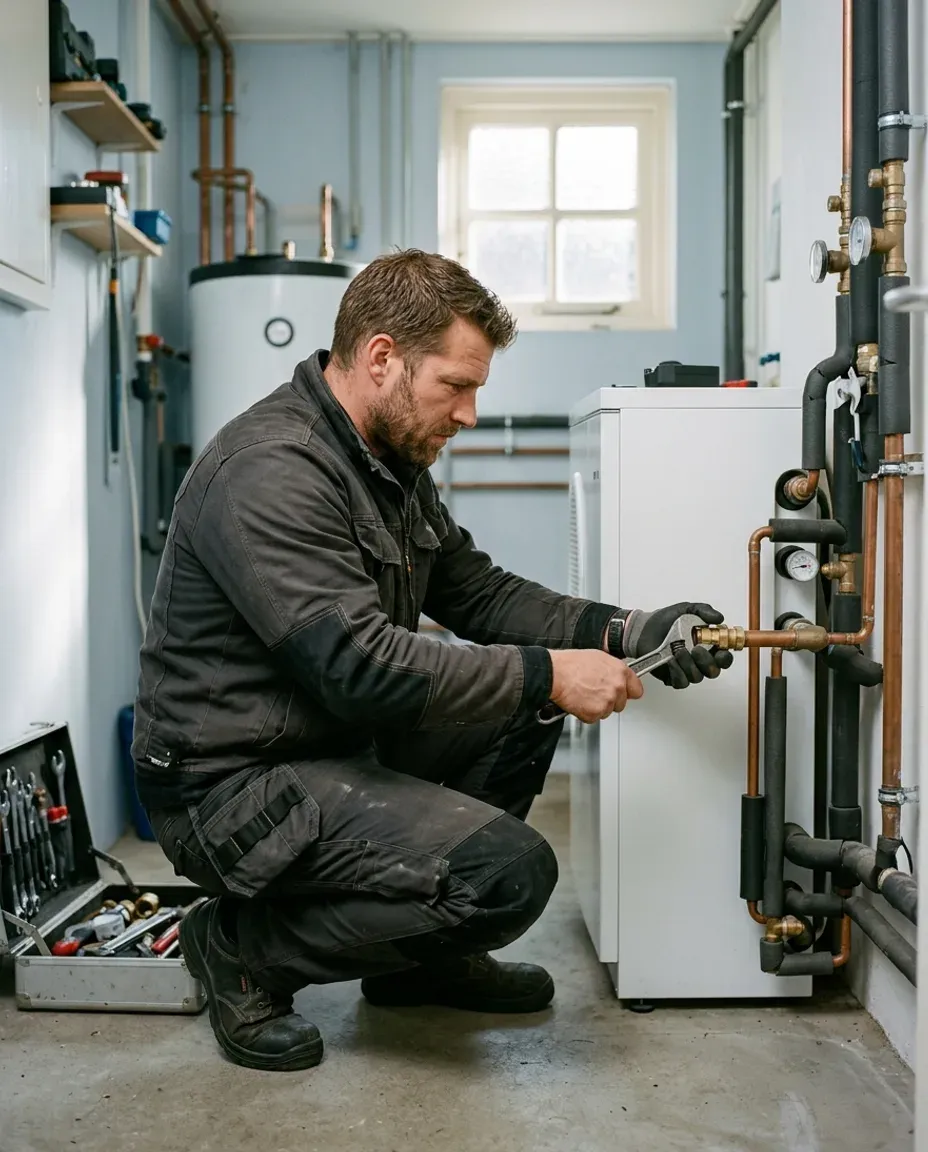
Engineer adjusting a heat pump installation in a plant room

Clients served

Agencies and organisations I have worked with over more than ten years — campaigns for national and international A-brands, from sole trader to listed company.

  • Havas Media Network
  • Publicis Groupe
  • Candid
  • The Fully Bookers
  • Hide and Seek
  • no.dots
  • matter
  • strevon
  • Havas Media Network
  • Publicis Groupe
  • Candid
  • The Fully Bookers
  • Hide and Seek
  • no.dots
  • matter
  • strevon

The problem

Sound familiar?

Every enquiry takes the same effort, but the margin differs by a factor of ten

A boiler breakdown and a complete heat pump installation come in through the same campaign and count as the same conversion. The algorithm then optimises towards whatever converts cheapest — the small job — while your schedule is crying out for the big ones.

You're buying leads that four competitors get too

Lead platforms sell the same enquiry to several installers at once. You race to call first, squeeze your margin in the quoting battle, and build nothing in the meantime: no brand awareness, no data, no channel of your own.

Emergency and sustainability are two completely different customers

Someone sitting without heating in January calls the first company that picks up within ten minutes. Someone considering a heat pump spends months comparing and running the subsidy numbers. One campaign for both does the right thing for neither.

You advertise across half the province while your engineers spend their days driving through it

Travel time is engineer time, and engineer time is your scarcest resource. An enquiry fifty kilometres away can cost more than it brings in — yet most campaigns don't factor in distance anywhere.

The result

What you get

  • Campaigns per job type — breakdown, replacement, sustainability — each with its own budget and its own value per enquiry
  • Enquiries under your own name from your own region, instead of shared leads from a platform
  • An advertising radius per job type: tight for breakdowns, wider for the jobs worth the drive
  • Phone enquiries that come back as conversions, including the emergency calls outside office hours
  • A budget that moves with your engineers' schedule: full is full, and then the money shifts to what you do want

Why does advertising for installation companies work differently than for other businesses?

Because the scarce resource is your engineer, not your customer — so you steer on filling hours with the right jobs, not on as many enquiries as possible. Most installation companies I speak with can barely keep up with the work already on the books. The question is then not how to bring in more work, but how to fill your engineers’ hours with the jobs that pay off the most.

That changes the whole setup. A campaign that celebrates every enquiry equally fills your schedule with small, low-margin jobs. A campaign that knows, per job type, what an enquiry is worth fills your calendar back-to-front with the work your business wants to grow on.

Does Google Ads work for an installation company?

Yes, and it’s nearly always the starting point: people search actively for breakdowns, boiler replacement and heat pumps, so the demand already exists. The gain lies in steering per job type, not in more volume.

Count on € 2 to € 8 per click, depending on job type and region. What it ultimately costs per job depends mostly on your service area and your reachability: a missed call on an emergency campaign is more expensive than any click price.

Why is job type the most important dial?

Because a boiler breakdown, a boiler replacement and a heat pump installation differ tenfold in order value but carry comparable click prices.

Put them in one campaign with one conversion goal, and the algorithm sees no difference and optimises towards whatever converts most often — almost always the smallest job.

The solution is the same as in every skilled trade: separate what differs. Distinct campaigns for breakdowns, replacements and sustainability work, each with its own budget and its own value per enquiry. From that moment on you can steer: more sustainability work if that’s where you want to grow, breakdowns only in your immediate service area, replacements as filler in between.

How do you handle emergency jobs differently from heat pump enquiries?

With a different rhythm: emergencies run on reachability and switch off when nobody answers, sustainability work runs on explanation and has to stay present for months.

The customer with a broken boiler and the customer considering a heat pump are both looking for an installer — and beyond that, nothing about them is the same. The first decides within an hour and calls; there, reachability, opening hours in the ad, and a campaign that switches off when nobody answers are what count. The second takes months, compares quotes, reads up on subsidies and payback periods; there, explanation counts, along with a patient presence throughout that entire journey.

The seasons diverge too: breakdowns and replacements peak in winter, air conditioning in the first warm week, sustainability work around the moments subsidy schemes make the news. A campaign that runs the same all year is too little on the peaks and too much in the troughs.

Are your own campaigns cheaper than buying leads from a platform?

In the long run almost always — a bought lead goes to several installers, your own enquiry comes in exclusively to you.

Lead platforms solve a real problem — enquiries without doing your own marketing — but the model has a built-in flaw: the same enquiry goes to several installers. You pay per lead, race to call first, and give up margin to win the quoting battle. And the platform uses your money to build its brand, not yours.

Your own campaigns flip that calculation around. The enquiry comes in exclusively to you, the cost per enquiry is transparent, and every month something grows that stays yours: search-term data, brand awareness in your region, and a measurable picture of which job type delivers what.

How big should your service area be?

Different per job type: tight for breakdowns and maintenance, wider for the orders that are more than worth a single trip. One radius for the whole business is almost always wrong.

For an installation company, distance is no detail: an hour of driving is an hour of engineer time, and that hour could have been billed. On a € 150 breakdown, forty minutes of driving eats the margin; on an € 8,000 heat pump installation, an hour on the road is a calculation you make happily.

In practice that means an emergency campaign with a ten to fifteen kilometre radius around the depot, with the town names from that area in the ad copy — people search “plumber ” and “boiler engineer ”, and those searches are cheaper than the generic variant. For sustainability work that radius can be two to three times wider, with a landing page that isn’t about a town but about the installation. Virtually every campaign I take over advertises everywhere equally hard, and so pays most for the trips that earn least.

What you can expect from me

I work a fixed number of days per week, fully dedicated to your accounts. You won’t get a junior who handles it alongside ten other clients. Everything runs in your own Google and Meta accounts, so you keep the campaigns, the history and the data — even if we ever part ways.

Packages

Three ways to win more customers

For breakdowns and replacements, Google Ads is the starting point: that demand already exists and is urgent. Meta becomes interesting for sustainability work — people spend months orienting themselves there, and you want to be on their radar before they start searching.

Capture

Capture existing demand — Google Search plus remarketing.

€695

per month

Plus €1,500 one-off setup fee

The setup fee is paid once, for the build: audit, landing pages and measurement. After that only the monthly amount runs on.

People are already searching for your product or service. We make sure you are visible the moment potential customers search, and bring back visitors who weren't ready to get in touch yet.

What you get:

  • Audit

    One-off, of your website, your measurement and your Google Ads, Meta Ads and LinkedIn Ads accounts.

  • Landing page

    One landing page on your own domain, built to turn visitors into enquiries.

  • Campaigns

    Google Ads plus remarketing via Meta or LinkedIn: you capture what is being searched for now and bring earlier visitors back.

  • Measurement

    Google Analytics and Google Tag Manager set up and verified, plus server-side tracking (Meta Conversions API and enhanced conversions) so your conversions still come through past ad blockers and cookie limits.

  • Leads

    One central place for every enquiry, with notifications by email or phone.

  • Reporting

    Every month, in plain language and without marketing jargon.

You can start from €400 media budget per month.

Not included: Media budget.

Cancellable monthly, with one month's notice.

See Capture


Recommended for most businesses

Attract

Build new demand — prospecting via Meta or LinkedIn.

€995

per month

Plus €2,000 one-off setup fee

The setup fee is paid once, for the build: audit, landing pages and measurement. After that only the monthly amount runs on.

Is there still little search demand for your product or service? Then we make sure you become visible to the right audience, before they start looking actively.

Everything in Capture, plus:

  • Campaigns

    Google Ads plus Meta or LinkedIn, now with prospecting to new audiences as well — on top of the remarketing you already had.

  • Landing pages

    Up to three landing pages on your own domain, each aimed at its own audience or service.

  • Optimisation

    New ad variants every month and ongoing A/B tests on ads and landing pages.

Also included:

  • Audit
  • Landing page
  • Measurement
  • Leads
  • Reporting

You can start from €1,000 media budget per month.

Not included: Media budget.

Cancellable monthly, with one month's notice.

See Attract

Convert

Turn enquiries into customers — automated follow-up, one overview.

€1,295

per month

Plus €2,500 one-off setup fee

The setup fee is paid once, for the build: audit, landing pages and measurement. After that only the monthly amount runs on.

Generating leads is only the first step. We make sure enquiries are followed up faster, so the chance that a lead actually becomes a customer goes up.

Everything in Attract, plus:

  • Follow-up

    Automated, by email, SMS or WhatsApp, so an enquiry never sits waiting.

  • Leads

    One central overview of the status of every enquiry, from first contact to customer.

  • Campaigns

    A second social advertising channel, if that returns more in your situation.

Also included:

  • Audit
  • Landing page
  • Measurement
  • Reporting
  • Landing pages
  • Optimisation

Not included: Media budget.

Cancellable monthly, with one month's notice.

See Convert

Whichever package it becomes, the build runs the same way. Below is exactly how.

How it works

How it runs

Five steps. You always know where we stand and what it costs — no surprises afterwards.

  1. 01 Weeks 1–2

    Audit

    I scan your website, your Google Ads, Meta Ads and LinkedIn Ads accounts and your measurement: where budget leaks away, what is being counted wrong and where the unused search volume sits.

  2. 02 One document

    Action plan

    You get one concrete plan: what's leaking, what that costs and what has to happen first — with a fixed price for the work. If you say no, it stops there.

  3. 03 30–45 minutes

    Advisory call

    We walk through the plan live and you decide what to do with it: run it yourself, or have me pick it up. If you choose a package, we set everything up in that call.

  4. 04 Months 1–3

    Build

    Measurement cleaned up, keyword research, landing pages and campaigns rebuilt — and live.

  5. 05 From month 4

    Optimise

    Optimising and steering month after month, with one plain-language report every month.

FAQ

Frequently asked questions

Question not in the list? Send a WhatsApp — you'll usually have an answer within the hour.

We currently get our leads through a platform. Why advertise ourselves?

A platform lead is sold to several installers at once, so you compete on speed and price with three or four others — and the platform keeps the customer relationship. An enquiry from your own campaign comes in specifically for you, at a cost you control yourself, and every euro simultaneously builds your own name and data. A platform can work fine as a supplement, but as your only channel it is structurally the most expensive option.

What should an enquiry for a heat pump actually cost?

We calculate that together upfront, and the outcome surprises most installers. With an installation worth tens of thousands of euros and a healthy margin, a serious enquiry can easily be worth dozens of euros — even if only a portion of them become orders. Whoever skips that calculation bids too cautiously and loses the auction to whoever makes it.

Our schedule has been full for months. Is advertising even worth it?

Full of the wrong jobs is not the same as full. Advertising here is a dial: you turn it up on the job types where your margin and your future lie, and turn it down on what you already have too much of. And building a pipeline for three months from now works perfectly well while today's schedule is full — you can always pause instantly.

Can we advertise only in our own region?

Yes, and more precisely than you'd think: per municipality or per radius around your premises, and differently per job type. For a breakdown you want to stay tight, because the margin evaporates in the van. For a major renovation or heat pump installation the circle can be wider, because one order more than earns back the travel time.

How do you handle the ISDE subsidy in ads?

The subsidy is a strong hook — for many customers it's the deciding nudge — but amounts and conditions change regularly. So the ads reference it without promising figures that could be different next month, and the landing page explains the current scheme. That way the promise keeps holding true, even when The Hague adjusts the rules.

Many customers call in the evening when the boiler breaks down. Is that measured?

Yes. With a call-forwarding number, those calls come back as conversions in Google Ads, with call duration as a filter against misdials. And just as important: if you don't run an emergency service, the emergency ads switch off outside your opening hours — being visible at a moment when nobody picks up is paying to send customers to your voicemail.

Industries

Also interesting

Jeffrey van Sluijs

About

I'm Jeffrey van Sluijs

I'm a digital advertising consultant with over ten years of experience managing multi-million-euro campaigns for national and international A-brands in tech, automotive and electronics — from e-commerce to B2B, tech to real estate. First from media agencies such as Publicis Groupe and Candid, now independently.

With Sluys I help marketing teams and agencies in their daily advertising work, while deploying AI workflows that take over the routine. That frees up time for the work that actually moves the numbers.

For you that means one thing above all: you talk to the same person who builds and steers the campaigns. No account manager relaying messages, no junior doing it on the side.

Let's talk

Virtual coffee?

Thirty minutes to see what there is to gain in your accounts — focused on installation companies. Pick a moment below that suits you.

Calendar not showing? Open it in a new tab.

Rather skip the calendar?

Just send a message with what's going on. You'll hear back from me personally within one working day — no sales team, no call centre.

  • No sales pitch — we look at your accounts
  • You'll walk away with a few concrete observations either way
  • You decide afterwards whether you want a proposal